Buy aux4coinsdumonde.eu ?
We are moving the project
aux4coinsdumonde.eu .
Are you interested in purchasing the domain
aux4coinsdumonde.eu ?
domain@kv-gmbh.de · 0541-91531010
Buy aux4coinsdumonde.eu ?
What are reactants and products?
Reactants are the starting materials in a chemical reaction that undergo a change to form new substances called products. Reactants are consumed during the reaction, while products are the end result of the reaction. The reactants are typically written on the left side of a chemical equation, while the products are written on the right side. **
What are limiting reactants in chemistry?
Limiting reactants, also known as limiting reagents, are the reactants in a chemical reaction that are completely consumed, thus limiting the amount of product that can be formed. In other words, they determine the maximum amount of product that can be produced in a reaction. The concept of limiting reactants is important in stoichiometry, as it helps to determine the theoretical yield of a reaction and identify the excess reactant that will be left over after the reaction is complete. **

Similar search terms for Reactants
Top-Angebote
Products related to Reactants:
-
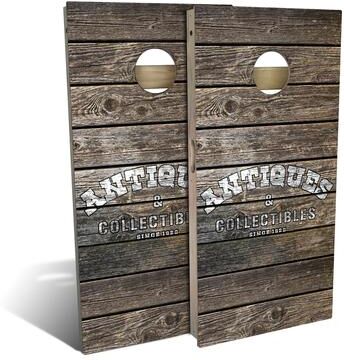
Skip's Garage Country Living Antiques Outdoor Cornhole Board SetIncludes: (2) Cornhole Boards & (8) Bags. Easily Choose Your Board Size & Type. Bags Will Complement The Board Colors. Easily Message Us Bag Color Requests. Add Accessories like Carry Cases, Hole Lights or Edge Lights.389,99 $*Shipping: 0,00 $Secure redirect to the provider
-
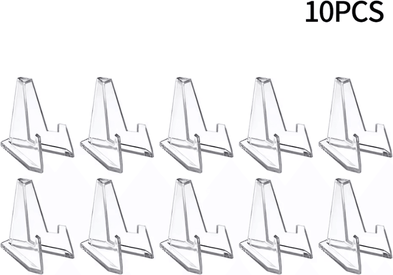
Inspire Curations 10 Pack Acrylic Coin Display Stands Clear Challenge Coin Holders For Coins, Medals, Cards & Collectibles sShowcase your favorite collectibles with confidence using these crystalclear acrylic coin display stands. Designed to securely hold coins, medals, commemorative tokens, trading cards, photos, and other keepsakes, these transparent stands keep the...90,99 $*Shipping: 0,00 $Secure redirect to the provider
-
Inspire Curations 10 Pack Acrylic Coin Display Stands Clear Challenge Coin Holders For Coins, Medals, Cards & Collectibles lShowcase your favorite collectibles with confidence using these crystalclear acrylic coin display stands. Designed to securely hold coins, medals, commemorative tokens, trading cards, photos, and other keepsakes, these transparent stands keep the...189,99 $*Shipping: 0,00 $Secure redirect to the provider
-
Skip's Garage Country Living Antiques Outdoor Cornhole Board SetIncludes: (2) Cornhole Boards & (8) Bags. Easily Choose Your Board Size & Type. Bags Will Complement The Board Colors. Easily Message Us Bag Color Requests. Add Accessories like Carry Cases, Hole Lights or Edge Lights.434,99 $*Shipping: 0,00 $Secure redirect to the provider


-
Are only reactants given in redox reactions?
No, redox reactions involve both reactants and products. In a redox reaction, one substance undergoes oxidation (loses electrons) while another undergoes reduction (gains electrons). Therefore, both the reactants and products are involved in the redox process. The reactants are the starting materials that undergo the redox reaction, while the products are the resulting substances after the redox reaction has occurred. **
-
How do you calculate reactants in chemistry?
To calculate reactants in chemistry, you first need to write a balanced chemical equation for the reaction. Then, determine the molar ratio between the reactants and the product in the balanced equation. Next, calculate the number of moles of the known reactant using its given mass or volume and its molar mass. Finally, use the molar ratio to calculate the number of moles of the other reactant needed for the reaction. **
-
How do you calculate the reactants in chemistry?
To calculate the reactants in a chemical reaction, you first need to write out the balanced chemical equation for the reaction. Then, you can use stoichiometry to calculate the amount of reactants needed based on the desired amount of product. This involves using the coefficients in the balanced equation to set up conversion factors and then using these conversion factors to calculate the amount of reactants required. Finally, you can use the molar mass of the reactants to convert between mass and moles if necessary. **
-
How do I know which reactants are Delta H?
In a chemical reaction, the reactants that are involved in a change in enthalpy (ΔH) are typically those that are being broken or formed. This means that the reactants that are being broken apart or formed into new compounds are the ones that contribute to the overall change in enthalpy of the reaction. To identify these reactants, you can look at the chemical equation for the reaction and identify the bonds that are being broken or formed. These are the reactants that will have a ΔH associated with them. **

'How do I solve an oxidation with multiple reactants?'
To solve an oxidation reaction with multiple reactants, you need to identify the oxidation numbers of each element in the reactants and products. Then, balance the equation by adding coefficients to ensure that the number of atoms of each element is the same on both sides of the equation. Next, determine which elements are being oxidized and which are being reduced by comparing their oxidation numbers before and after the reaction. Finally, balance the electrons transferred in the oxidation and reduction half-reactions to ensure that the overall charge is conserved. **
Why do the reactants not disappear in chemical reactions?
The reactants do not disappear in chemical reactions because of the law of conservation of mass, which states that matter cannot be created or destroyed in a chemical reaction. Instead, the reactant molecules are rearranged and their bonds are broken and formed to produce new products. This means that the total mass of the reactants is conserved and is equal to the total mass of the products. Therefore, the reactants do not disappear, but rather undergo a transformation into new substances. **
Top-Angebote
Products related to Reactants:
-
Inspire Curations 10 Pack Acrylic Coin Display Stands Clear Challenge Coin Holders For Coins, Medals, Cards & Collectibles mShowcase your favorite collectibles with confidence using these crystalclear acrylic coin display stands. Designed to securely hold coins, medals, commemorative tokens, trading cards, photos, and other keepsakes, these transparent stands keep the...105,99 $*Shipping: 0,00 $Secure redirect to the provider
-
Inspired Deals UV Flashlight For Pet Stains 21 LED 395nm Blacklight Urine Detector & Currency Checker UV Flashlight For Pet Stains 21 LED 395nm Blacklight Urine Detector & Currency CheckerLet hidden messes finally come to light with this powerful UV flashlight for pet stains designed for pet owners who value a spotless home. This compact yet highperformance tool reveals invisible stains, odors, and marks that ordinary cleaning...34,97 $*Shipping: 0,00 $Secure redirect to the provider
-
Skip's Garage Country Living Antiques Outdoor Cornhole Board SetIncludes: (2) Cornhole Boards & (8) Bags. Easily Choose Your Board Size & Type. Bags Will Complement The Board Colors. Easily Message Us Bag Color Requests. Add Accessories like Carry Cases, Hole Lights or Edge Lights.389,99 $*Shipping: 0,00 $Secure redirect to the provider
-
Inspire Curations 10 Pack Acrylic Coin Display Stands Clear Challenge Coin Holders For Coins, Medals, Cards & Collectibles sShowcase your favorite collectibles with confidence using these crystalclear acrylic coin display stands. Designed to securely hold coins, medals, commemorative tokens, trading cards, photos, and other keepsakes, these transparent stands keep the...90,99 $*Shipping: 0,00 $Secure redirect to the provider
-
What are reactants and products?
Reactants are the starting materials in a chemical reaction that undergo a change to form new substances called products. Reactants are consumed during the reaction, while products are the end result of the reaction. The reactants are typically written on the left side of a chemical equation, while the products are written on the right side. **
-
What are limiting reactants in chemistry?
Limiting reactants, also known as limiting reagents, are the reactants in a chemical reaction that are completely consumed, thus limiting the amount of product that can be formed. In other words, they determine the maximum amount of product that can be produced in a reaction. The concept of limiting reactants is important in stoichiometry, as it helps to determine the theoretical yield of a reaction and identify the excess reactant that will be left over after the reaction is complete. **
-
Are only reactants given in redox reactions?
No, redox reactions involve both reactants and products. In a redox reaction, one substance undergoes oxidation (loses electrons) while another undergoes reduction (gains electrons). Therefore, both the reactants and products are involved in the redox process. The reactants are the starting materials that undergo the redox reaction, while the products are the resulting substances after the redox reaction has occurred. **
-
How do you calculate reactants in chemistry?
To calculate reactants in chemistry, you first need to write a balanced chemical equation for the reaction. Then, determine the molar ratio between the reactants and the product in the balanced equation. Next, calculate the number of moles of the known reactant using its given mass or volume and its molar mass. Finally, use the molar ratio to calculate the number of moles of the other reactant needed for the reaction. **
Similar search terms for Reactants
-
Inspire Curations 10 Pack Acrylic Coin Display Stands Clear Challenge Coin Holders For Coins, Medals, Cards & Collectibles lShowcase your favorite collectibles with confidence using these crystalclear acrylic coin display stands. Designed to securely hold coins, medals, commemorative tokens, trading cards, photos, and other keepsakes, these transparent stands keep the...189,99 $*Shipping: 0,00 $Secure redirect to the provider
-
Skip's Garage Country Living Antiques Outdoor Cornhole Board SetIncludes: (2) Cornhole Boards & (8) Bags. Easily Choose Your Board Size & Type. Bags Will Complement The Board Colors. Easily Message Us Bag Color Requests. Add Accessories like Carry Cases, Hole Lights or Edge Lights.434,99 $*Shipping: 0,00 $Secure redirect to the provider
-
Skip's Garage Country Living Antiques Outdoor Cornhole Board SetIncludes: (2) Cornhole Boards & (8) Bags. Easily Choose Your Board Size & Type. Bags Will Complement The Board Colors. Easily Message Us Bag Color Requests. Add Accessories like Carry Cases, Hole Lights or Edge Lights.389,99 $*Shipping: 0,00 $Secure redirect to the provider
-
Skip's Garage Country Living Antiques Outdoor Cornhole Board SetIncludes: (2) Cornhole Boards & (8) Bags. Easily Choose Your Board Size & Type. Bags Will Complement The Board Colors. Easily Message Us Bag Color Requests. Add Accessories like Carry Cases, Hole Lights or Edge Lights.341,99 $*Shipping: 0,00 $Secure redirect to the provider
-
How do you calculate the reactants in chemistry?
To calculate the reactants in a chemical reaction, you first need to write out the balanced chemical equation for the reaction. Then, you can use stoichiometry to calculate the amount of reactants needed based on the desired amount of product. This involves using the coefficients in the balanced equation to set up conversion factors and then using these conversion factors to calculate the amount of reactants required. Finally, you can use the molar mass of the reactants to convert between mass and moles if necessary. **
-
How do I know which reactants are Delta H?
In a chemical reaction, the reactants that are involved in a change in enthalpy (ΔH) are typically those that are being broken or formed. This means that the reactants that are being broken apart or formed into new compounds are the ones that contribute to the overall change in enthalpy of the reaction. To identify these reactants, you can look at the chemical equation for the reaction and identify the bonds that are being broken or formed. These are the reactants that will have a ΔH associated with them. **
-
'How do I solve an oxidation with multiple reactants?'
To solve an oxidation reaction with multiple reactants, you need to identify the oxidation numbers of each element in the reactants and products. Then, balance the equation by adding coefficients to ensure that the number of atoms of each element is the same on both sides of the equation. Next, determine which elements are being oxidized and which are being reduced by comparing their oxidation numbers before and after the reaction. Finally, balance the electrons transferred in the oxidation and reduction half-reactions to ensure that the overall charge is conserved. **
-
Why do the reactants not disappear in chemical reactions?
The reactants do not disappear in chemical reactions because of the law of conservation of mass, which states that matter cannot be created or destroyed in a chemical reaction. Instead, the reactant molecules are rearranged and their bonds are broken and formed to produce new products. This means that the total mass of the reactants is conserved and is equal to the total mass of the products. Therefore, the reactants do not disappear, but rather undergo a transformation into new substances. **
* All prices are inclusive of VAT and, if applicable, plus shipping costs. The offer information is based on the details provided by the respective shop and is updated through automated processes. Real-time updates do not occur, so deviations can occur in individual cases. ** Note: Parts of this content were created by AI.